What Questions Should You Ask an AI Consultant Before Hiring Them?
By Amin Rabinia · Founder, Glissando AI
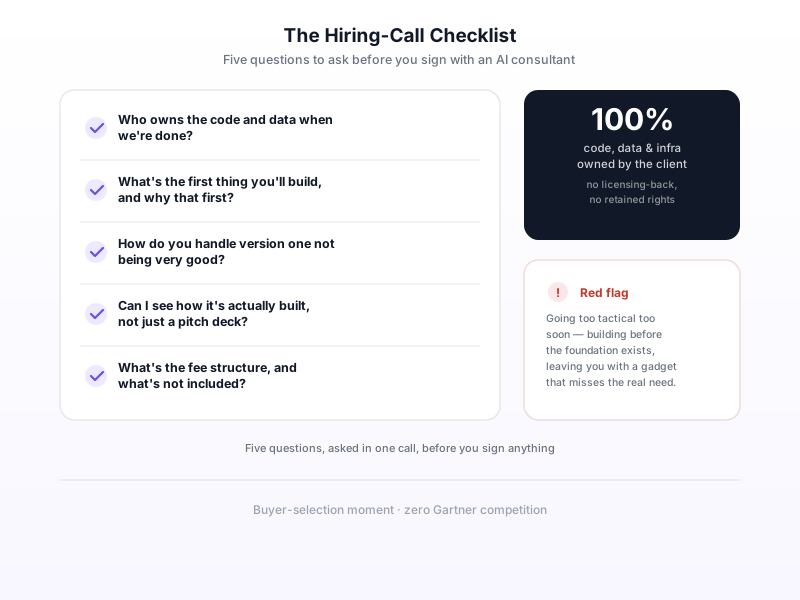
Most of what determines whether an AI engagement goes well happens before any code is written: in the first call, in the answers you get to a handful of direct questions. Ask the right ones and a consultant either answers cleanly or hesitates in a way that tells you something. Skip them and you find out the hard way, three months and a chunk of budget in.
This isn't a generic vendor-evaluation checklist. It's the five questions that actually separate a consultant who builds something you'll use from one who builds something impressive that misses the point, pulled from what we watch buyers ask us and what we wish more of them asked other vendors before us.
1. Who Owns the Code, Data, and Infrastructure When We're Done?
This is the first question, and it should get an immediate, unqualified answer. Not "we'll discuss IP in the contract," but an actual answer on the call.
Ours is simple: the client owns everything outright. Code, data, and infrastructure are fully theirs from day one, with no licensing-back and no rights we retain on our side. If you build something with us and walk away, you walk away with the whole thing, not a license to keep using what we built.
That's not universal in this industry. Some vendors build on a proprietary platform you can only run through them, or retain rights to reuse components across clients, or hand over code with a dependency on infrastructure you don't control. None of that is necessarily dishonest. It might be disclosed clearly in a contract you'll read later. But if the answer to "who owns this" is vague on a sales call, it will not get less vague after you've paid a deposit.
2. What's the First Thing You'll Build, and Why That First?
This question exposes the single most common failure mode we see from other vendors: going too tactical too soon. Building before establishing the foundation, before understanding the bigger picture, so the client ends up with a gadget that doesn't meet the real need.
A vendor who answers "we'll start with the chatbot" or "we'll wire up the integration first" without asking you a single question about your business first is telling you how they work. A vendor who spends the first conversation understanding what actually matters to your business, then sequences the build around that: strategy before code, foundation before feature, is telling you something different.
The tell isn't enthusiasm. Plenty of vendors sound excited about your project. The tell is whether "what should we build first" comes from a real answer about your business, or from whatever's easiest to demo.
3. How Do You Handle the Fact That Version One Won't Be Very Good?
Any consultant who promises a finished, high-accuracy system on the first pass is either inexperienced or not being straight with you. AI systems are grown on real data, not specified upfront. version one is supposed to be the floor, not the ceiling. The honest answer describes how they'll get the basic task working first, then improve accuracy and coverage as real usage data comes in, and how they'll set your expectations for that curve up front instead of overselling day one.
What you're listening for is whether they have an actual plan for the gap between v1 and a system you'd trust unattended: a roadmap sequenced by what matters most, not a vague promise that it'll "get better." If the answer is "it'll just work," that's the least credible answer on this list.
4. Can I See How It's Actually Built, Not Just a Pitch Deck?
Ask to see something real: an architecture diagram, a walkthrough of a similar system, an honest description of what broke on a past project and what changed. A consultant who can only show you polished outcomes and never the mechanism underneath is either new enough to not have war stories yet, or not inclined to share them.
This is also where you find out how a vendor talks about failure. Every real build has a version-one problem, a security scare, a feature that got cut. A consultant who can describe theirs specifically is more trustworthy than one who claims a spotless record; nobody has one.
5. What's the Fee Structure, and What's Not Included?
Fixed fee, hourly, retainer: each has a place, and the honest tradeoffs between a freelancer, a full-time hire, and a boutique consultancy are worth understanding before you compare quotes. What matters more than the structure itself is what's excluded: hosting costs, third-party API usage, scope beyond the first phase, support after launch. Get that in writing before you sign, not after the first invoice surprises you.
The Red Flag That Predicts a Failed Build
If there's one pattern worth watching for above the rest, it's the answer to question two. Going too tactical too soon, starting to build before there's a real foundation or a real understanding of what the business actually needs, is the single most common way an AI engagement produces a technically working thing that nobody ends up using. It looks like progress. It demos well. It just doesn't solve the problem you had.
The fix isn't complicated: a consultant who asks more questions than they answer in the first call is usually the one sequencing the work correctly.
What This Means for You
You don't need to become a technical evaluator to hire well here. You need five direct questions and the willingness to notice when an answer is vague where it should be specific. Ownership, sequencing, iteration, transparency, and fees: ask them in that order, on the first call, before any proposal gets written.
If you're at that stage now, Get Expert Input and bring these five questions with you. Ask us the same ones you'd ask anyone else.
This post is part of the AI Strategy Guide, covering everything we've written on planning AI work, organized by subtopic.
Related reading
Get the next one in your inbox
One practical AI idea per week, from real client projects. No fluff, unsubscribe anytime.