Autonomous RFQ Processing Engine
A B2B procurement team was drowning in manual RFQ research, with dozens of incoming quote requests per day, each requiring staff to manually identify vendors, gather pricing, and compile comparisons. We replaced that entire workflow with an intelligent AI pipeline that handles triage, research, and recommendation automatically.
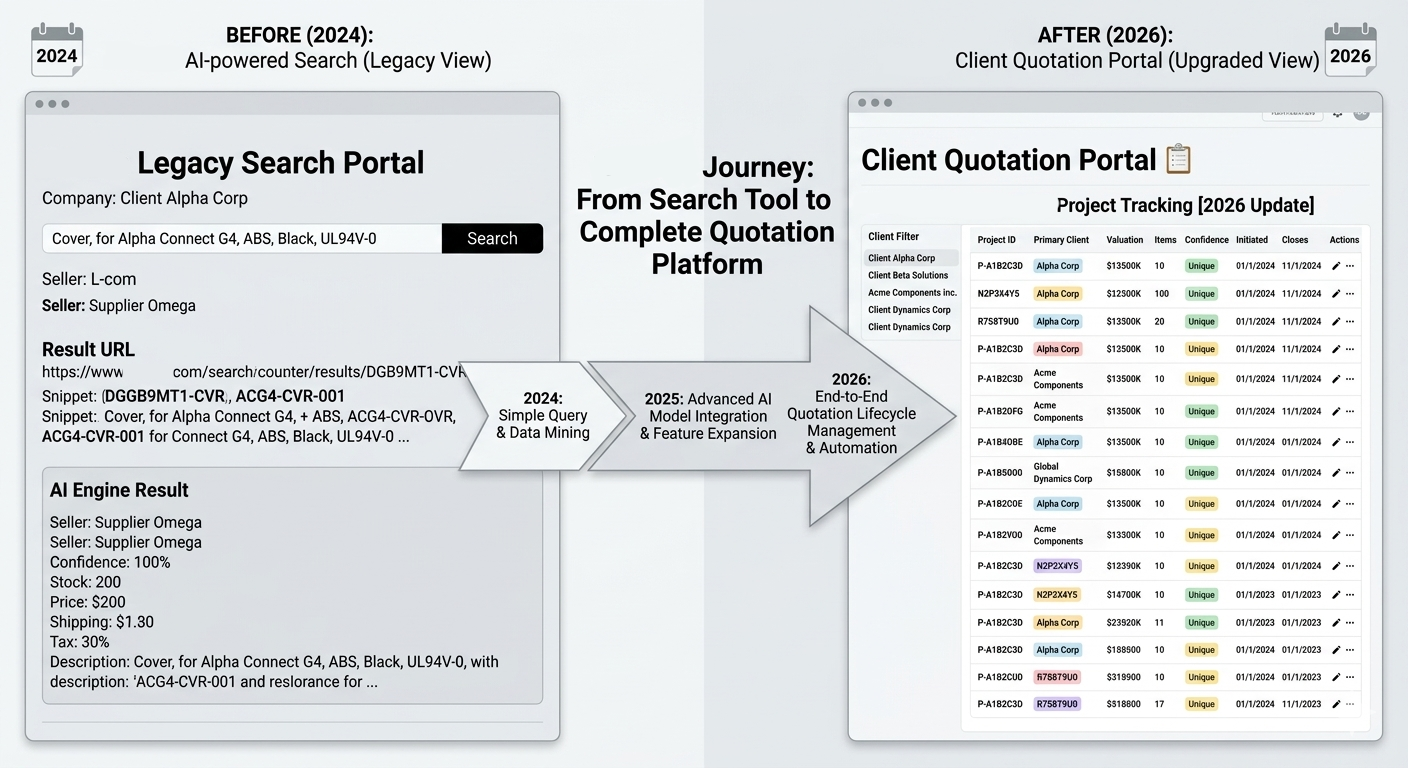
Want to click through it yourself? We put up a live, sandboxed demo with mock data: no signup, no real customer data. Try the Live Demo →
The Problem
Procurement teams in high-volume B2B environments deal with a relentless stream of RFQs, requests for quotes that require matching buyer needs to the right suppliers at the right price. Done manually, each RFQ takes 15–45 minutes of analyst time: reading requirements, cross-referencing vendor catalogs, pulling historical pricing, drafting comparisons.
The client's team was handling this entirely by hand. Volume was growing, headcount wasn't, and response times were slipping, creating friction with buyers and costing deals.
What We Built
We designed a multi-stage AI pipeline that intercepts incoming RFQs, interprets their requirements using a language model, and automatically routes them through a structured research and recommendation workflow.
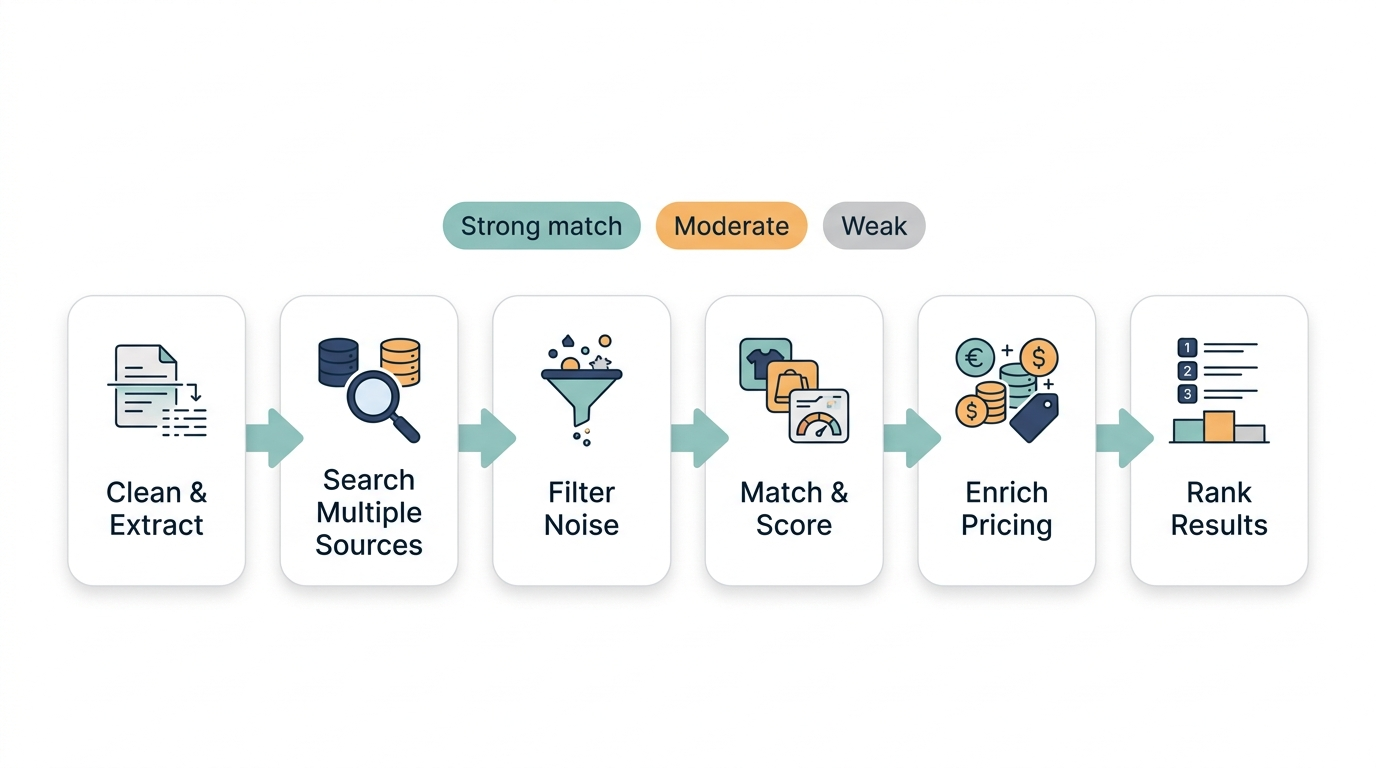
The pipeline moves RFQs from intake through AI interpretation, vendor matching, and pricing analysis without human intervention.
The system handles:
- Intelligent intake parsing, extracting structured requirements (product type, quantity, specs, deadline) from unstructured RFQ text
- Vendor matching: scoring and ranking suppliers against the parsed requirements using historical performance data
- Pricing analysis, pulling quote history and market benchmarks to contextualize bids
- Automated output, generating a ranked comparison report for the procurement manager to review and approve in minutes, not hours
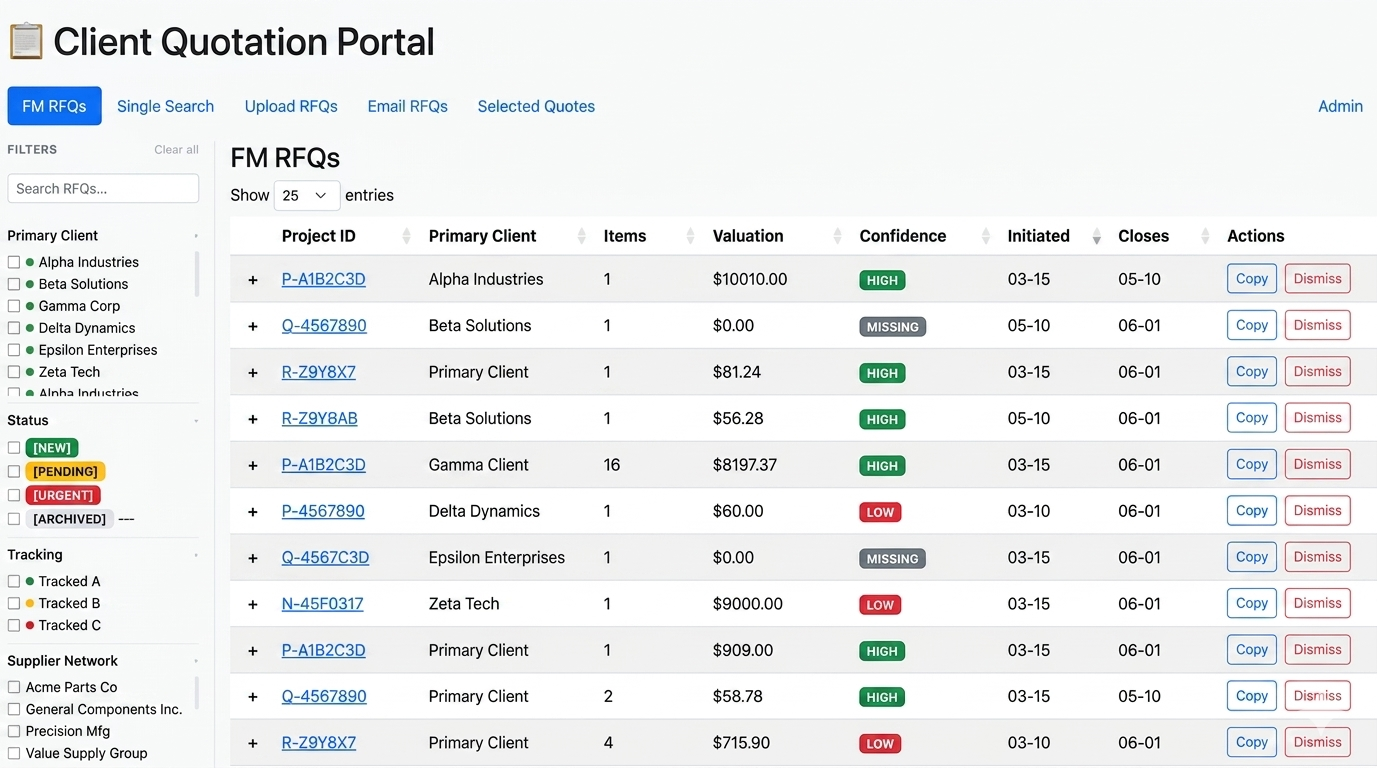
The management dashboard gives procurement teams full visibility into pipeline status, quote comparisons, and vendor performance.
Iteration and Refinement
The system went through multiple build cycles. Early versions relied on simpler extraction logic; as we collected production data, we retrained parsing models on real RFQ patterns from the client's industry, significantly improving accuracy on edge cases like non-standard spec formats and custom unit conventions.
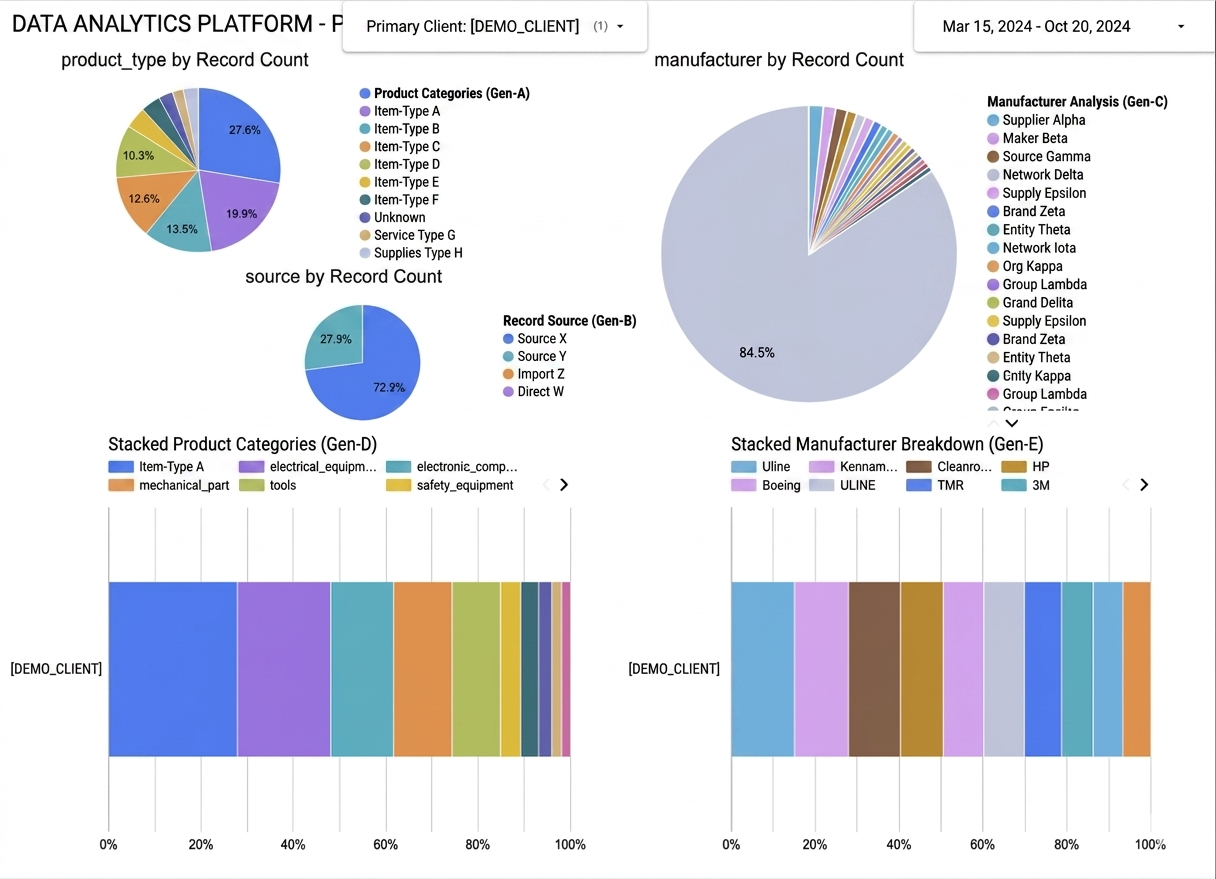
Analytics layer tracking throughput, accuracy, and time-to-recommendation across the pipeline.
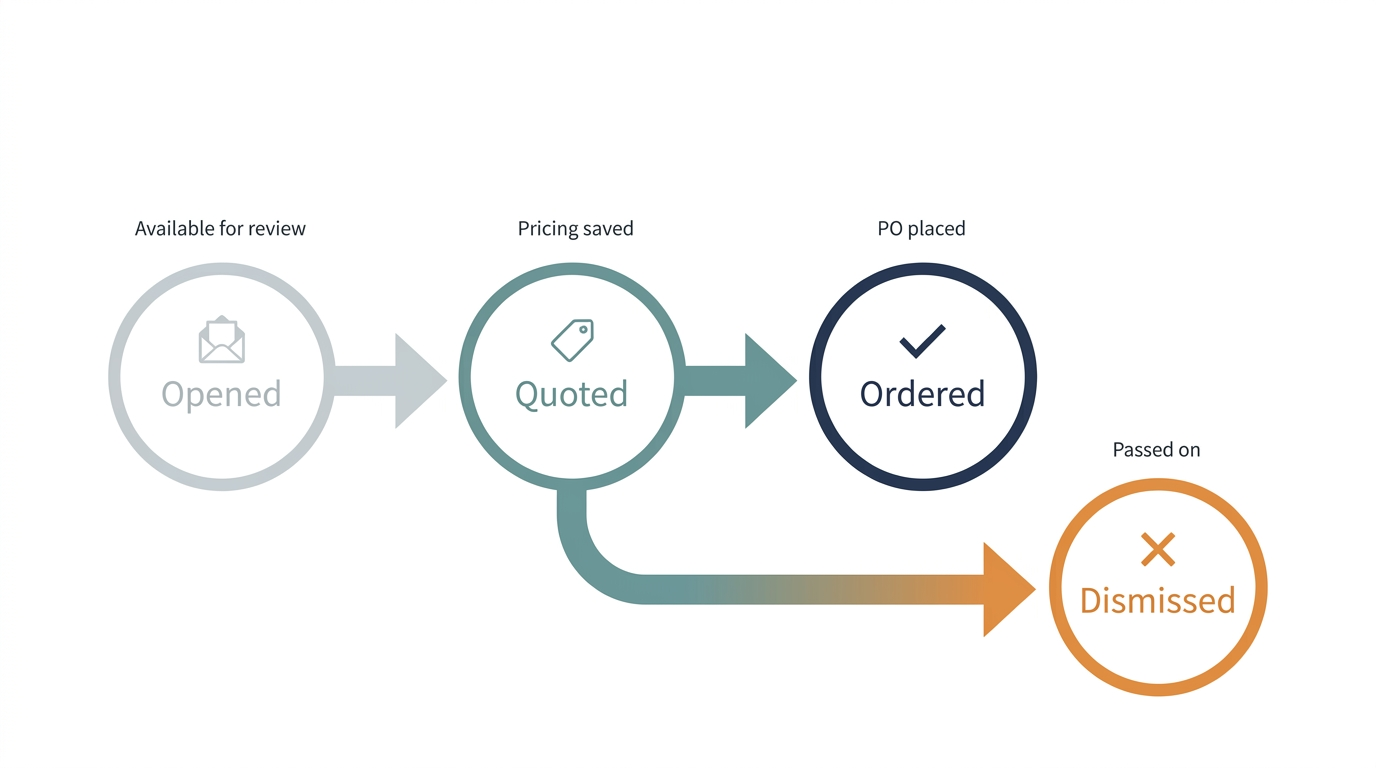
Full RFQ lifecycle view, from incoming request to approved vendor selection.
Architecture Highlights
The pipeline runs on Google Cloud Platform with Cloud Run handling stateless processing tasks, Pub/Sub managing event queuing between stages, and BigQuery as the analytics and historical data layer. All components are containerized and auto-scaling, able to handle 10× normal volume without configuration changes.
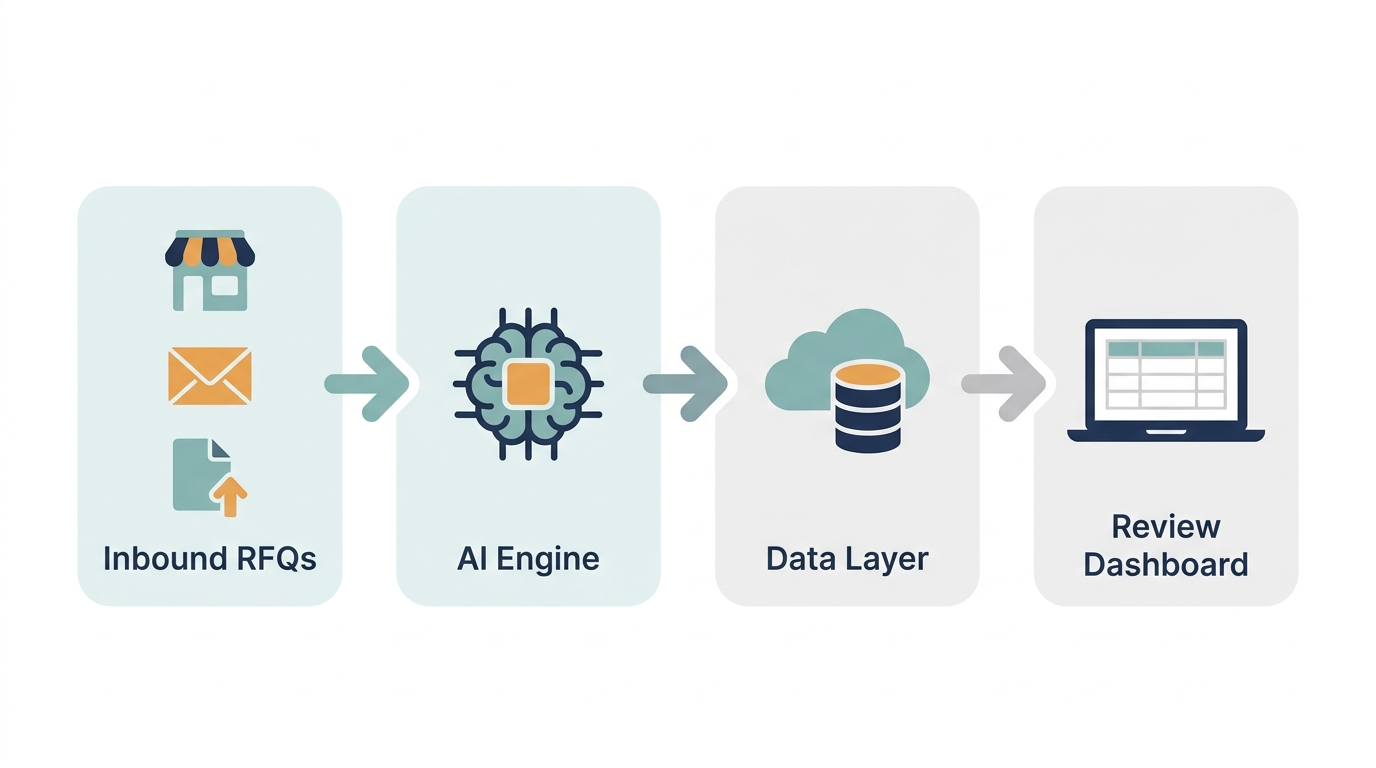
Serverless, event-driven architecture scales automatically with RFQ volume.
Outcomes
- RFQ research time reduced from 30+ minutes per request to under 60 seconds
- Procurement team capacity effectively tripled without adding headcount
- Vendor recommendation accuracy above 90% on production RFQs after the second build iteration
- Full audit trail and analytics layer for compliance and continuous improvement
"We needed help with full automation and data analytics. Glissando AI has created an AI search tool that does most of the research needed for proposals. Glissando AI's work has improved our time savings, efficiency, and accuracy."
What This Looks Like for Your Business
If your team spends significant time on repetitive research, comparison, or routing tasks, whether in procurement, sales, operations, or customer service, the same pattern applies. Identify the workflow, map the decisions, automate the mechanical steps, keep humans on judgment calls.
That's the model. We've applied it across multiple industries. It scales.
Want to automate a workflow like this? Explore AI Automation Consulting →