Fully Automated YouTube Content Engine
A content operation running three YouTube channels needed to scale output without scaling headcount. We designed and built an end-to-end autonomous pipeline, from editorial planning and script generation through video assembly and publishing, that runs continuously without human intervention.
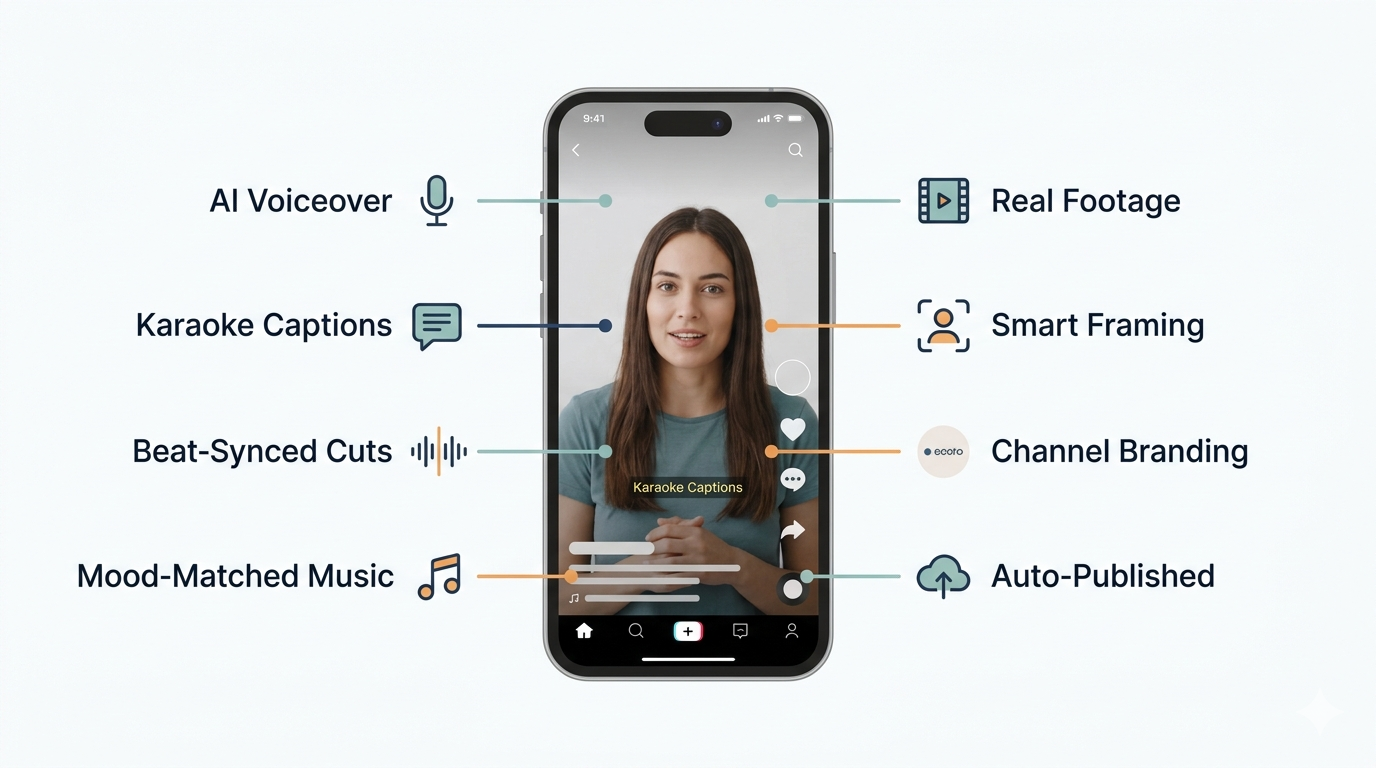
The Challenge
Producing consistent YouTube content at scale is labor-intensive. Topic research, scripting, voiceover recording, video editing, thumbnail creation, metadata writing, and scheduling: each piece requires time, skill, and coordination. For a multi-channel operation, the compounding overhead makes growth nearly impossible without a proportional team increase.
The client wanted to expand from one channel to three while actually reducing the time their team spent on production. The only viable path was full automation.
Architecture: An Editorial AI
We approached this as an editorial intelligence problem, not just a workflow automation problem. The system needed to make real decisions: what topics to cover, how to frame them for the specific audience of each channel, what structure would hold viewer attention, and when to publish for maximum reach.
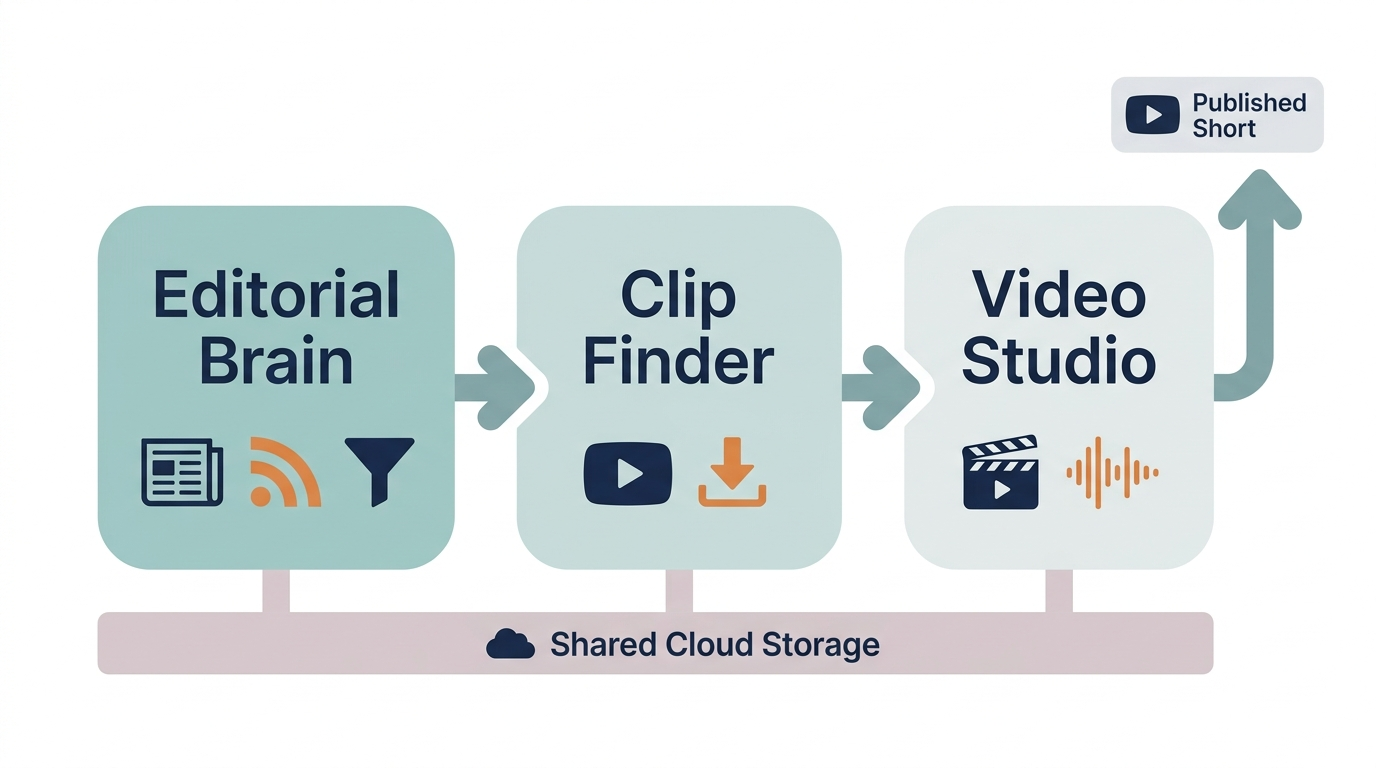
Multi-stage pipeline architecture: research → script → voice → assembly → metadata → publish, operating across three channels simultaneously.
The pipeline stages:
- Topic Intelligence: Automated trend monitoring and keyword research, filtered through per-channel editorial guidelines set at configuration time. The system surfaces high-opportunity topics before competitors saturate them.
- Script Generation: LLM-based script writing tuned to each channel's voice, format, and audience expectations, with structured hooks, retention patterns, and call-to-action placement built in.
- Voice and Audio: Text-to-speech synthesis with quality passes for pacing, emphasis, and naturalness. Background music and audio mixing handled programmatically.
- Video Assembly: B-roll sourcing, visual composition, caption generation, and final render, all automated based on script structure and timing.
- Metadata and Publishing: SEO-optimized titles, descriptions, tags, and thumbnail generation. Scheduling logic optimizes publish timing per channel based on historical performance data.
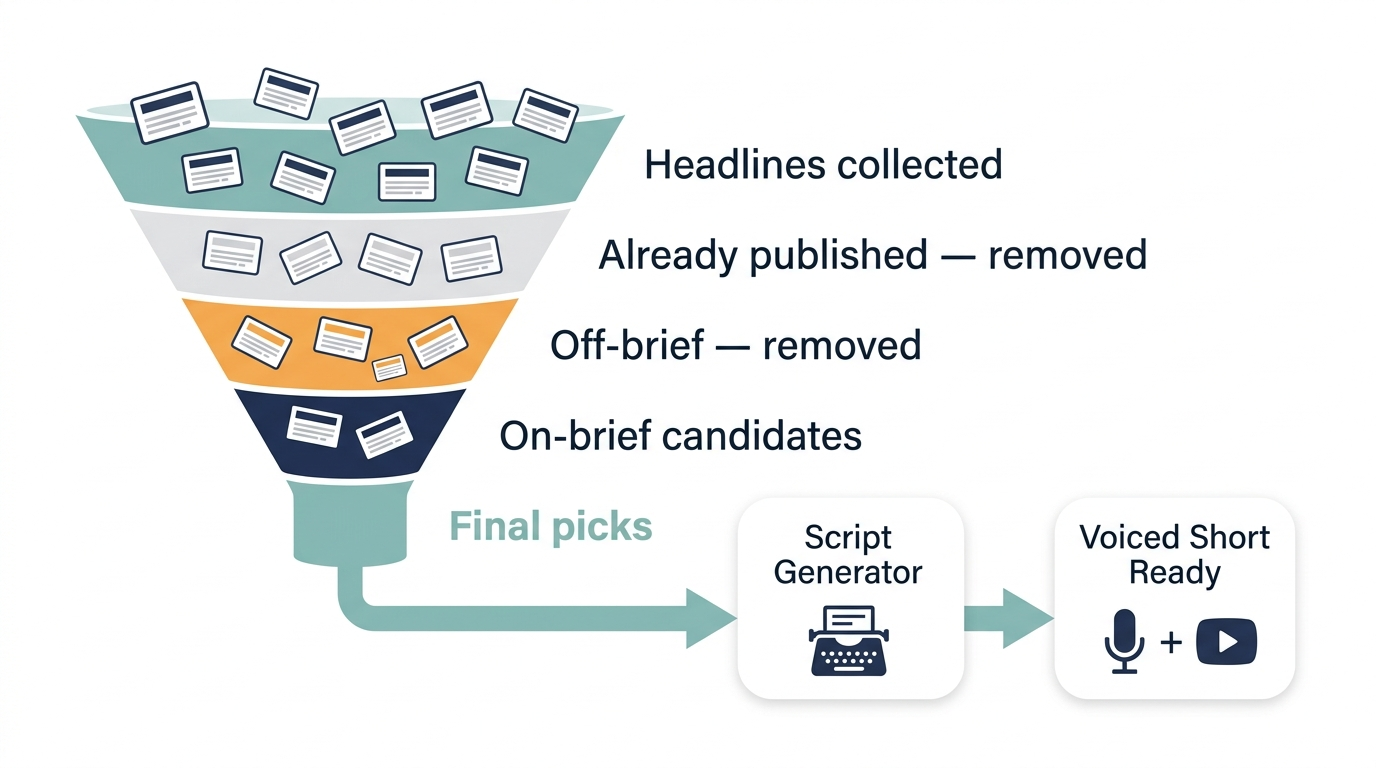
The editorial funnel: trending topics enter at the top, and fully produced, published videos come out the other end automatically.
Per-Channel Customization
Each of the three channels operates with a distinct editorial identity: different niche, different audience, different tone. The pipeline is parameterized to honor these differences at every stage. Topic selection algorithms are seeded with channel-specific guidelines; script prompts encode voice and format rules; visual assembly templates reflect each channel's aesthetic.
The result is three channels that each feel intentional and human-curated, despite being entirely machine-produced.
Outcomes
- Three channels running simultaneously on a single automated pipeline
- Content production time reduced from hours per video to minutes of human oversight at setup
- Consistent publish cadence maintained 24/7 regardless of team availability
- Per-channel editorial identity preserved across all automated output
- System designed for horizontal expansion: adding a fourth channel requires configuration, not engineering
The Bigger Pattern
What makes this project replicable is the underlying principle: any knowledge-intensive, multi-step production workflow can be decomposed into stages where AI handles the mechanical and generative work, while human judgment is applied once at the configuration and quality standard level, rather than at every execution cycle.
The same model applies to marketing content, e-commerce product copy, research reports, and client communications. If you're doing the same type of work repeatedly, you're describing an automation opportunity.
Have a content or production workflow to automate? Explore AI Automation Consulting →