Can AI Web Scraping Actually Deliver Competitive Intelligence? What We Learned Building One
By Amin Rabinia · Founder, Glissando AI
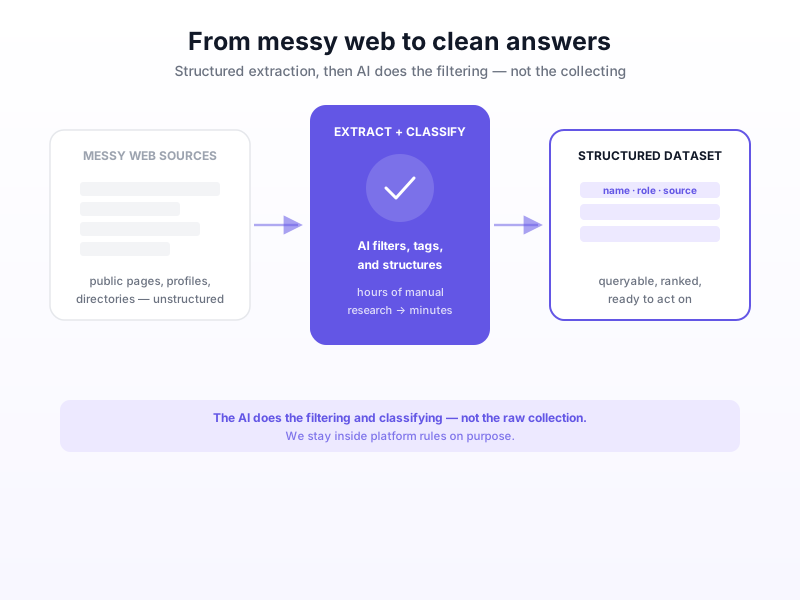
"Just scrape the web" sounds simple until you've actually tried to turn what's out there into something usable. The public internet is full of the information businesses need, who works where, what competitors are doing, what's changing in a market, but it's scattered across pages that were never designed to be read by a machine, let alone turned into a clean answer to a specific question.
We built a system to do exactly that: pull structured research out of messy public sources and turn it into something a business could actually query. The interesting part isn't the crawling. It's determining where AI is and isn't the right tool in that pipeline.
What the Client Actually Needed
The request was research on individuals, careers, and related public information: the kind of due-diligence work that normally means a person spending hours manually searching, cross-referencing, and compiling notes across dozens of sources. Multiply that across every person or company that needs researching, and it's a job that scales linearly with headcount unless something changes the equation.
What changes the equation isn't a faster way to search. It's automating the actual synthesis, the part where a human reads ten inconsistent pages and decides what they add up to. That's the piece we focused AI on, and it's a very different problem than "collect a lot of web pages."
The Real Work: Filtering, Not Fetching
Fetching a web page is a solved problem. It's been solved for decades. What's not solved by default is turning that page into something structured: is this actually the right person, is this job title current or historical, does this source agree or conflict with another one, is this worth including at all. That's a judgment call repeated thousands of times across thousands of pages, and it's exactly the kind of pattern-matching-at-scale task AI is good at.
We tried a range of processing approaches before landing on what worked: this wasn't a single clever prompt, it was iteration across multiple extraction and classification methods until the output was reliably accurate rather than plausible-looking. That's consistent with something we've said about AI products generally: domain structure beats model choice. The value here wasn't a smarter model reading the web. It was building the right structure, specifically the right taxonomy of what counts as a match, a duplicate, a stale record, for the model to apply consistently.
The result: research that used to take hours per subject compressed into minutes, fully automated, with a human reviewing the output rather than compiling it from scratch. Once the data is structured, it becomes something you can actually query and break down, not a stack of tabs and notes.
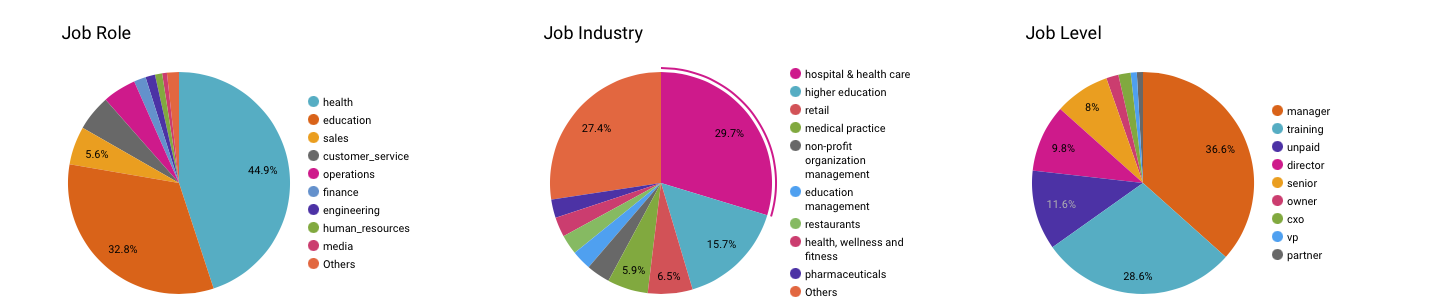
Once it's structured, messy public data becomes something you can actually break down and query.
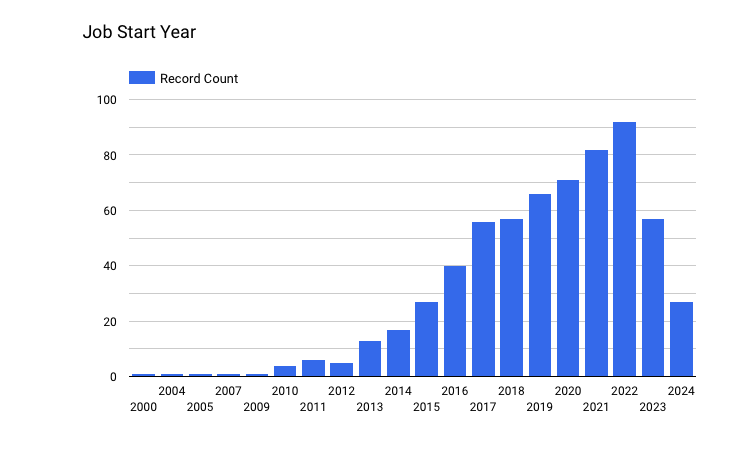
Trends that were invisible across hundreds of scattered pages show up immediately once the data has structure.
The Ethical Line We Drew on Purpose
This is worth stating plainly, because it's a real design decision and not an afterthought: we built this to avoid violating the platforms' own policies on data access, and we put AI to work on the processing side of the pipeline, not on bypassing collection restrictions. If a platform's terms don't allow automated collection from it, the answer is to use a different source or a legitimate API, not to find a clever way around the rule.
That boundary shaped where AI actually added value in this build. The intake side, what data comes in and from where, followed the same rules any person doing manual research would follow. The AI's job started after that: taking legitimately available public information and doing the filtering, classifying, and structuring a human would otherwise spend hours doing by hand. That's a meaningfully different thing than "AI scrapes anything it can reach," and it's the version of this technology we'd actually recommend building.
Where This Is Useful for an Ordinary Business
Competitive intelligence and due diligence are the obvious use cases, but the underlying pattern shows up anywhere a business needs to turn scattered public information into a structured answer: researching potential hires before an interview, building a list of prospects that actually match an ideal customer profile, tracking what competitors are publicly saying or changing about their offerings, verifying claims a vendor or partner has made about themselves.
The common thread is the same one behind any AI agent worth building: a real agent completes a workflow, not just one step of it. A crawler that only fetches pages hands you a pile of links. A system that fetches, filters, classifies, and structures hands you an answer; the difference between raw material and something a person can actually use in the next ten minutes.
What This Means for You
If your team is spending real hours manually compiling research from public sources (on people, companies, competitors, or markets), that's a strong signal this kind of system pays for itself. The technology to do the hard part, the classification and structuring, is real and working today. The part worth getting right before you build anything is the same boundary we drew: know exactly which sources you're allowed to use and build the AI's job around processing legitimately available data, not stretching what "public" means.
If you're weighing whether this kind of research automation fits your business, that's worth a real conversation before any build starts. Get Expert Input, a paid session where we look at what research your team is doing manually today and tell you honestly what's worth automating.
This post is part of the AI Agents Guide, from the basics to the technical depth behind agents that actually work.
Related reading
Get the next one in your inbox
One practical AI idea per week, from real client projects. No fluff, unsubscribe anytime.